
menu

Avenue Franklin Roosevelt in Brussels: the story of an exceptional avenue

Avenue Franklin Roosevelt in Brussels: the story of an exceptional avenue

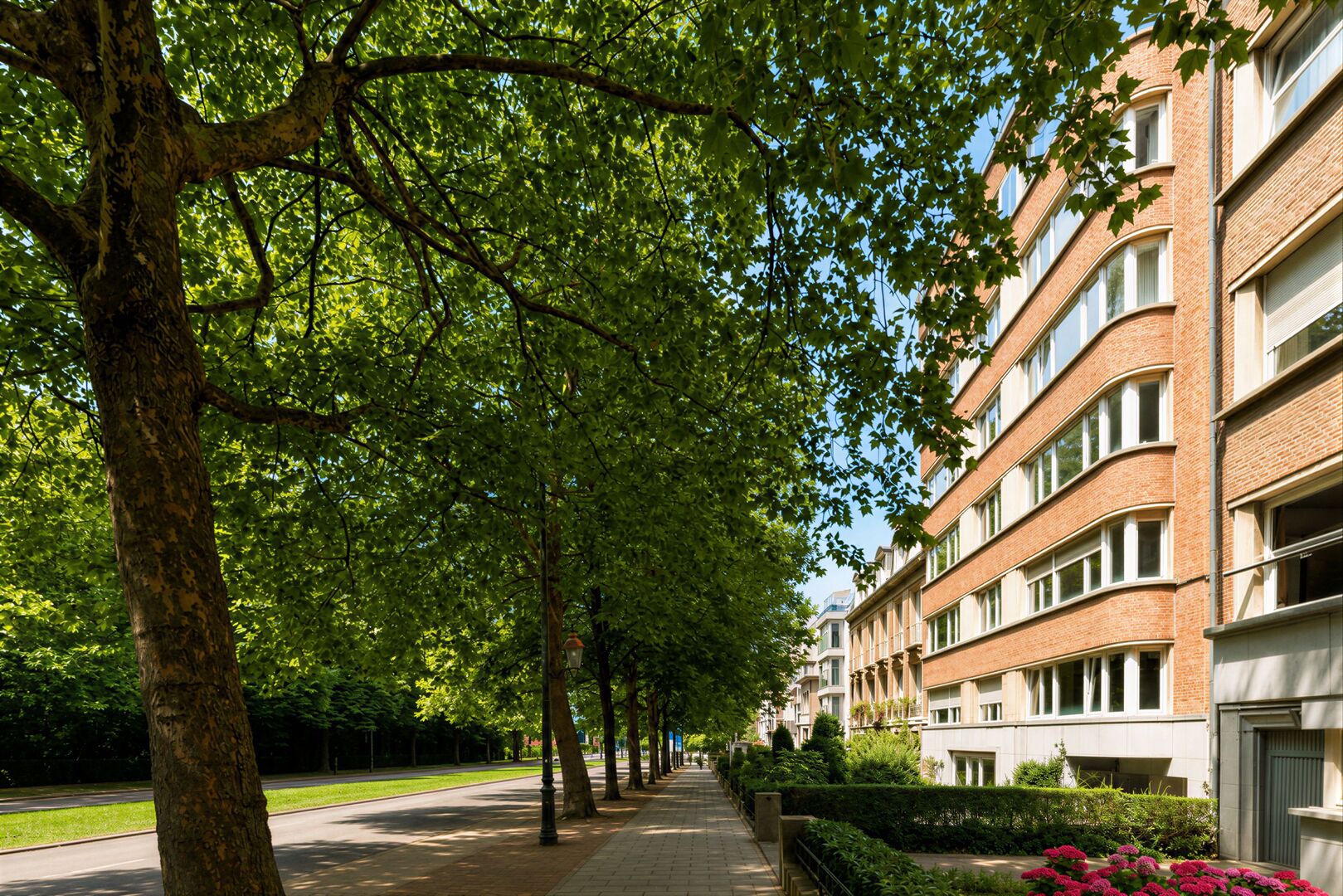
Bordering the Bois de la Cambre and lined with Art Deco villas and modernist residences, Avenue Franklin Roosevelt is one of Brussels' most sought-after addresses. A look back at the history of this iconic avenue, spanning royal heritage, the memory of the Liberation, and outstanding architecture.

The origins: a project driven by Léopold II

From 1907 onwards, the City of Brussels decreed the creation of the avenue as part of a vast urbanisation project. Designed by city engineer Georges Wurth, the route crossed the site that had just hosted the 1910 World Fair, running between Boulevard de la Cambre and Chaussée de La Hulpe. At the time, the avenue was named Avenue des Nations, and was marketed as the "Pearl of the Capital".
Avenue Franklin Roosevelt in Brussels: the story of an exceptional avenue

The interwar years: the birth of a bourgeois neighbourhood

From 1922 onwards, Avenue des Nations truly took shape, under strict architectural and urban planning rules that explain the stylistic unity still visible today. This period saw the emergence of some of the finest examples of early 20th-century Brussels architecture, including Villa Empain, an Art Deco masterpiece designed by Michel Polak (1930-1934). Numerous Art Deco and modernist townhouses, designed by renowned architects, complete this exceptional heritage, much of which is now listed in the architectural heritage inventory of the Brussels-Capital Region.

1945: a tribute to the Liberation

At the end of the Second World War, Avenue des Nations was renamed Avenue Franklin Roosevelt, in tribute to the 32nd President of the United States, who, alongside Churchill and Stalin, was seen as one of the architects of the Allied victory and Belgium's Liberation.


Share


X
View favorites
favorieten